01 / The Brief
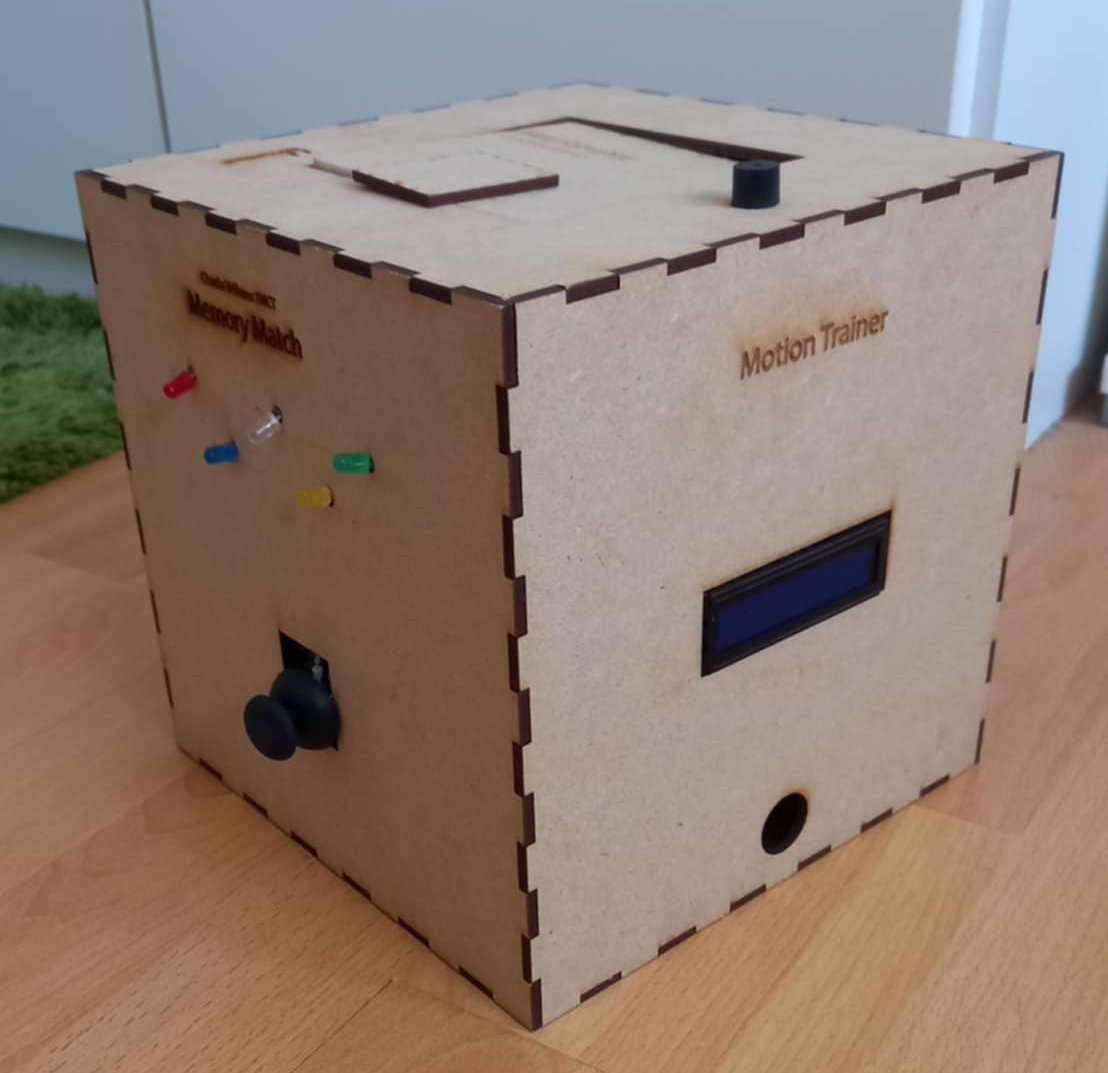
Brainplay is a smart, interactive play cube designed to monitor cognitive and motor function in people with dementia, even when they are still living independently at home. The cube features four interactive games that test reaction time and fine motor skills. A connected web dashboard collects data from these games and displays it in graphs, giving caregivers or relatives a clearer picture of the user’s condition and progress over time.
Tech Stack //
Technical Breakdown
The hardware stack consists of a Raspberry Pi 4 programmed in Python to handle the game logic and control the GPIO pins. The dashboard’s front end was built using a modern web framework, with data retrieved from a MySQL database via a FastAPI (or Flask) REST API. WebSockets are used for communication between the cube and the dashboard to ensure real-time updates. The enclosure was precision-designed in CAD software and manufactured using laser cutting, taking into account the cable routing of the internal electronics.
02 / The Challenge
The assignment was to create a “Connected Object”: a physical interactive system that not only offers a standalone experience but also logs all user interactions as data. The biggest challenge lay in closing the loop between hardware and software: how do you translate the analog actions of a vulnerable demographic (older adults) into clean, usable data that can be analyzed via a web dashboard?
03 / The Concept
BrainPlay is a modular play cube that includes four unique games, each designed to stimulate a different aspect of the brain: memory, reaction time, fine motor skills, and logic. The design is intentionally minimalist and tactile, combining natural materials like wood with clear, colorful feedback via LEDs and sound. The concept bridges the gap between physical play and digital data analysis.
04 / The Solution
I have developed a fully functional prototype in which a Raspberry Pi serves as the “brain” of the cube. The games are controlled via push buttons, magnetic sensors, and LED feedback. The results of each game session are sent in real time to a cloud database. Caregivers can view performance data via a streamlined web dashboard, giving them an objective picture of the patient’s cognitive state and progress.