01 / The Brief
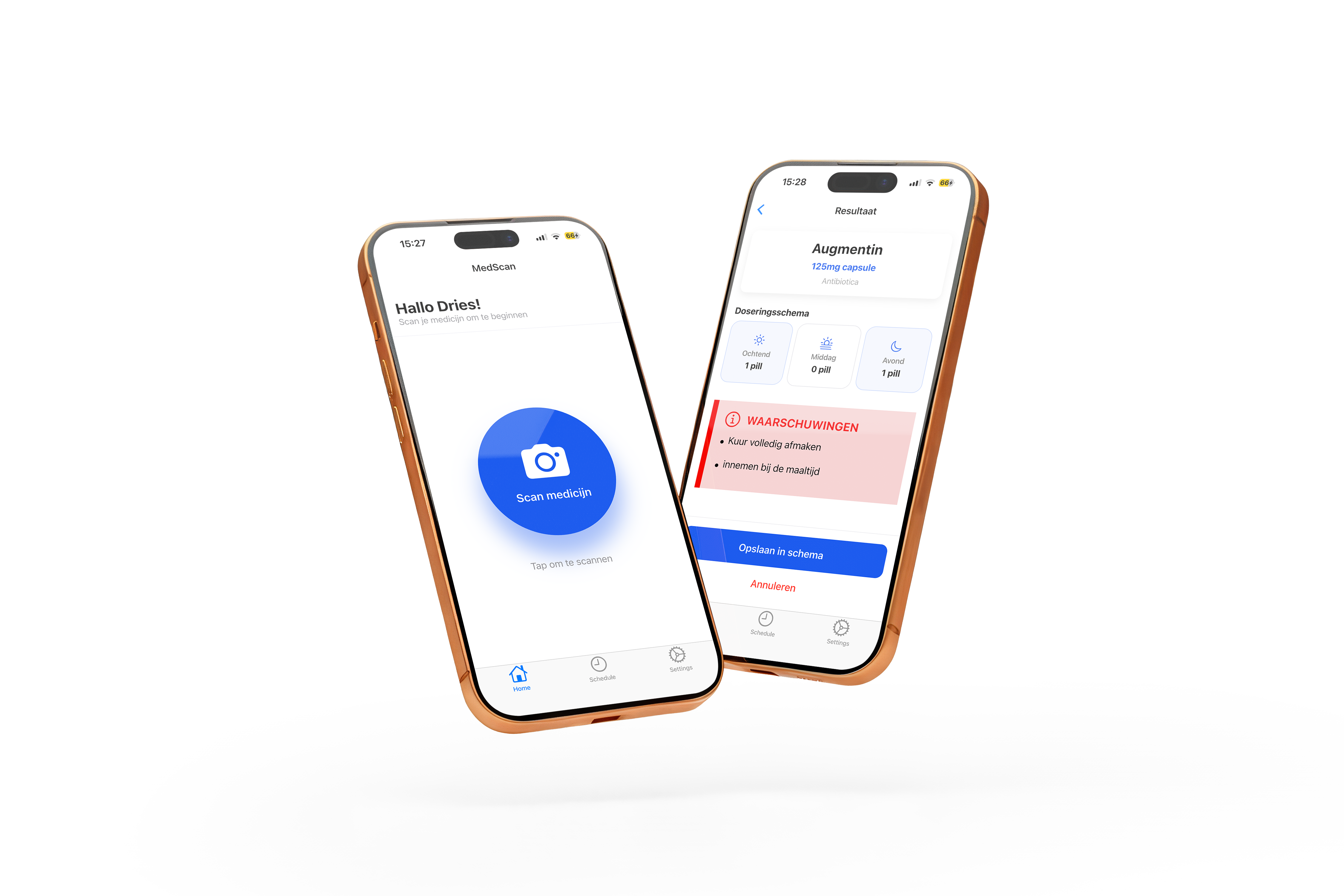
MedScan is a mobile app designed to improve users' adherence to treatment by digitizing medication management. At the heart of the app is an intelligent scanner that uses optical character recognition (OCR) to identify medications and instantly link them to a comprehensive medical database. Users can easily add their scanned medications to a personalized daily schedule, including specific dosing times and reminders.
Tech Stack //
Technical Breakdown
The mobile application was built using the Flutter framework and utilizes on-device OCR (Google ML Kit) to identify medications in real time via the camera hardware, ensuring a native-only experience. For the backend, Firebase Cloud Firestore with persistence enabled was chosen, creating a robust offline-first architecture that keeps vital medical data accessible at all times. The UI was developed to be fully responsive with an integrated Semantics layer for accessibility, while complex micro-interactions and explicit animations via AnimationControllers provide high-quality visual feedback. The entire system is driven by a scalable Provider state management system that seamlessly handles synchronization between the AI scanner, the user interface, and the cloud database.
02 / The Challenge
The core objective was to develop a mobile application that includes features not possible in a standard web environment. The focus was on leveraging native hardware and delivering a superior user experience (UX) that goes beyond what a browser can offer.
03 / The Concept
MedScan was created out of the need for a fast, error-free way to manage medication. Instead of manually typing in long medication names, users utilize their smartphone’s camera as an intelligent input source. The goal is to make it as easy as possible to keep track of a medication schedule, while ensuring reliability (even without an internet connection).
04 / The Solution
MedScan lost dit op door Google ML Kit (OCR) te combineren met een Real-time NoSQL-backend. De app herkent tekst op medicijnverpakkingen, koppelt deze aan een database en stelt de gebruiker in staat om met één druk op de knop een gepersonaliseerd innameschema te genereren. Door een "Offline-First" architectuur is de vitale informatie over medicatie altijd toegankelijk, zelfs op locaties met slecht bereik zoals ziekenhuizen.